EARTHMARKET
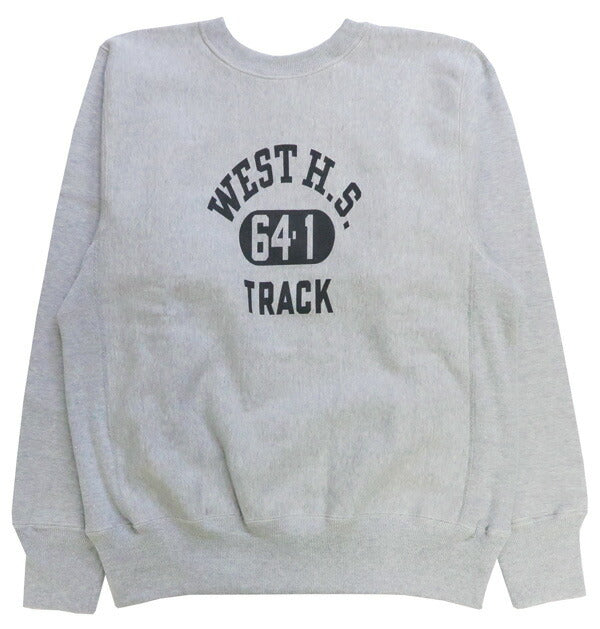
Warehouse WAREHOUSE Reverse Style Crewneck Sweatshirt Lot. 483 WEST H.S.
Warehouse WAREHOUSE Reverse Style Crewneck Sweatshirt Lot. 483 WEST H.S.
Regular price
¥20,900 JPY
Regular price
Sale price
¥20,900 JPY
Unit price
per
Tax included.
Shipping calculated at checkout.
Couldn't load pickup availability
■WAREHOUSE Reverse Weave Crewneck Sweatshirt Lot.483 WEST H.S
 Model: Height 175cm, Weight 62kg, wearing size L When you pick up this sweatshirt, the first thing that will surprise you is its "weight." This newly developed sweatshirt is the result of repeated trial and error to reproduce the RW type from the 1960s. This innovative athletic sweatshirt, which uses the fabric horizontally to reduce shrinkage, is often noticed for its side panels, but its characteristic lies in the "yarn." The fabric, knitted with a thorough high-density weave, is hard yet elastic, and heavy yet softly fluffy. What Warehouse is particular about is the "grain" of the fabric. The "grain standing up" usually means "vertical lines" in normal sweatshirts, but in this RW model, it's "horizontal lines." To make the grain stand out, they repeatedly changed combinations, including the yarn count and the density of the weave. What they arrived at was the unusual method of "doubling up" the yarn for a sweatshirt. Normally, one thread each is used for the face, middle, and back when knitting a sweatshirt, but doubling up the yarn made it easier to achieve a denser weave. Furthermore, thanks to the characteristics of the loop-wheeling machine, it became possible to make the fabric hard while maintaining its elasticity, and to make the surface grain stand out. It is said that with sinker knitting machines, which were adopted later in history, even with the same yarn specifications, the fabric becomes too hard, and the difference in the finished knit is obvious. The "weight" of the finished fabric requires skilled work during dyeing and sewing. Dyeing places a greater load on the fabric than usual, and sewing is not as easy as with lightweight knitwear. The "baton relay" of cooperation in all processes—fabric, dyeing, and sewing—is what gives this RW type sweatshirt its "weight." And I will also describe the original RW model. Surprisingly, when analyzing the torn parts of a 1960s vintage garment, commonly known as a "tataki tag," it was found that "doubled-up" threads were exposed. The spirit of the pioneers who attempted to develop athletic wear with a pastoral yet uncompromising approach is unearthed precisely through "the relentless pursuit of detail." Reverse-style dedicated loop-wheeled brushed lining Navy and Bordeaux feature cracked prints, while Oatmeal and Heather Grey feature discharge prints. *The following shrinkage will occur after washing. Weight: 740g  Since its establishment in 1995, this brand has remained committed to its theme of "faithful reproduction of vintage clothing," never being swayed by the ever-changing trends of the fashion industry. For every vintage piece encountered, they meticulously research the background of the era it was produced in, from the very thread to the fabric, sewing, and washing processes.  Navy  Bordeaux  Oatmeal  Heather Grey 


Size Details Click here for how to measure sizes. Country of Origin Japan Material 100% Cotton Colors Navy, Bordeaux, Oatmeal, Heather Grey Remarks Sizes are actual measurements, and average values are listed. Please note that there may be slight individual differences. *The following shrinkage will occur after washing. About the product Many of our products are designed based on vintage items. To emphasize the authentic feel, there may be slight sewing discrepancies, fabric color variations, and textures or uneven colors due to processing. Please understand that these are also part of the product's charm. Also, product specifications (sewing, parts, color, size, etc.) may change without notice. We hope you enjoy the product with these points in mind. |